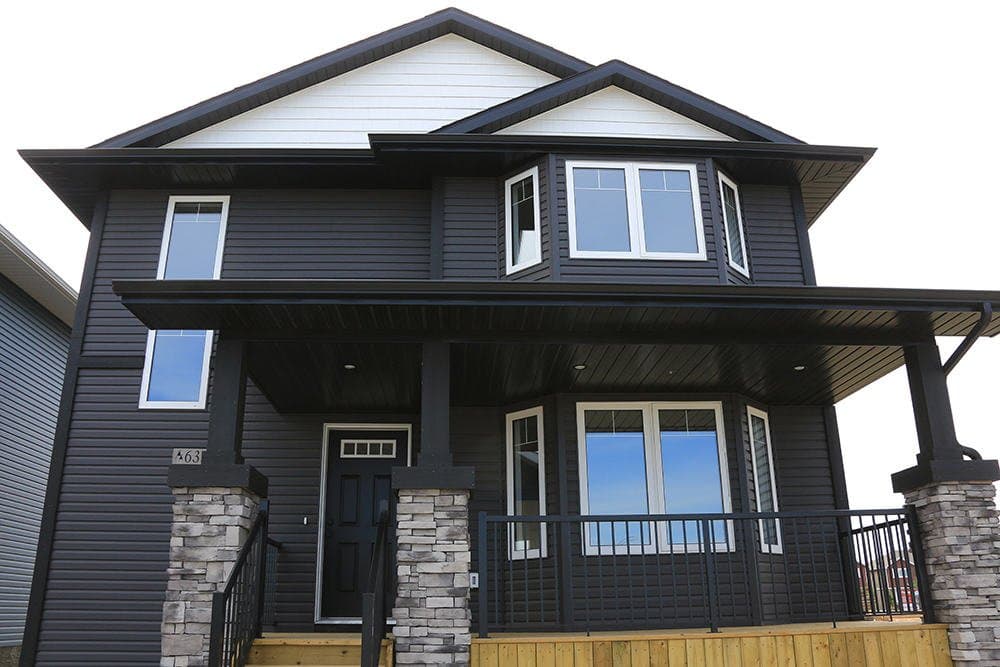
Is Craneboard vinyl siding worth it for homes in St. Charles, MO?
Craneboard is worth it for most St. Charles homes. It's a thick, insulated vinyl panel — typically around 5/16" of solid vinyl — that resists the denting, warping, and fading that standard vinyl struggles with in Missouri's freeze-thaw winters and humid summers. If your home has older, hollow-back siding that flexes when you press it, Craneboard is a meaningful step up in durability and feel.
How does standard vinyl siding hold up in Missouri weather?
Standard vinyl holds up fine in mild climates, but St. Charles County's weather pattern — hard freezes from December through February, then high humidity and heat through summer — is harder on thin vinyl panels. They expand and contract with every temperature swing, and over time that movement causes panels to buckle, fade, or crack at the edges. It's not a failure of the product; it's just that standard vinyl wasn't engineered for this kind of thermal stress.
What makes Craneboard different from regular vinyl siding?
Craneboard is a solid-core vinyl panel, not a hollow shell. The solid construction eliminates the "hollow knock" sound of standard vinyl, resists dents from hail and lawn equipment, and adds a layer of insulating value that thin panels don't have. The result is a panel that looks more like real wood up close and holds its shape through Missouri's seasonal swings better than hollow-back alternatives.
St. Charles County homeowners ask us this comparison all the time — and honestly, it's the right question to ask before you sign anything. The siding decision you make today is going to be on your house for twenty to forty years. Here's what you need to know to make the right call.
What St. Charles Homes Are Actually Dealing With
A lot of homes in St. Charles, O'Fallon, Wentzville, and Lake Saint Louis were built between the late 1970s and the 1990s. They're solid houses — good bones — but the original siding is at or past the end of its useful life. You'll see a lot of chalky, faded panels, sections that have buckled or warped near the foundation, and corner trim that's started to separate.
The houses out in Dardenne Prairie and St. Peters tend to be newer, but they often came with builder-grade vinyl — the thinnest panels the contractor could spec and still meet code. That siding looks fine at closing, but it doesn't hold up the way a quality replacement panel does.
St. Charles winters aren't gentle. We get hard freezes, ice storms, and enough hail each spring to keep the roofing companies busy. Your siding takes the same hits your roof does. The question is whether it's built to absorb them.
Craneboard vs. Standard Vinyl: What Actually Differs
- Thickness: Craneboard panels run approximately 5/16" thick solid vinyl — standard vinyl is typically .040" to .046" hollow-back
- Impact resistance: Solid core holds its shape on hail and debris strikes; hollow panels dent and crack more easily
- Thermal movement: Thicker panels expand and contract less dramatically with temperature swings, reducing buckling over time
- Sound: Solid vinyl sounds and feels like wood; hollow vinyl sounds like plastic when struck
- Insulating value: Craneboard adds modest thermal resistance; standard hollow panels add none
- Appearance: Craneboard's woodgrain texture is deeper and more realistic at close range
- Warranty: Check the manufacturer spec sheet — solid-core panels typically carry longer and stronger warranty terms
Craneboard vs. Standard Vinyl: Side-by-Side
| Factor | Craneboard (Solid Core) | Standard Vinyl (Hollow Back) |
|---|---|---|
| Panel thickness | ~5/16" solid vinyl | .040"–.046" hollow shell |
| Hail / impact | Resists denting and cracking | Cracks and dents more easily |
| Thermal movement | Minimal buckling over time | More expansion / contraction cycles |
| Sound on impact | Solid, wood-like | Hollow plastic sound |
| Added insulation | Yes — modest R-value added | None |
| Curb appeal | Realistic woodgrain depth | Visible as vinyl at close range |
The bottom line from that comparison: Craneboard wins on every performance factor that matters in St. Charles County's climate. Standard vinyl isn't a bad product — it just wasn't designed with Missouri winters and summer heat in mind.
When Standard Vinyl Still Makes Sense
We'd be doing you a disservice if we pretended Craneboard is the right answer for everyone. If you're preparing a starter home in Florissant or Arnold for sale and you need to freshen the exterior on a tight timeline, a quality hollow-back panel in a neutral color might give you the curb appeal lift you need without over-improving for the neighborhood.
The key word is "quality." Not all standard vinyl is equal. A thicker hollow-back panel — .046" or better — with a good manufacturer warranty is a far better choice than the thinnest panels on the market, even if it's not Craneboard. The mistake homeowners make is buying on panel profile alone and ignoring thickness specs entirely.
That said, for most St. Charles, Wentzville, and O'Fallon homeowners who plan to stay in their home for more than five years, Craneboard earns its keep. The performance gap between solid-core and hollow-back becomes visible within the first decade, especially after a Missouri hail season or two.
What Does a Vinyl Siding Install Actually Look Like?
We walk through a five-step process on every job: consultation and measurement, product selection, scheduling, installation, and a final walkthrough. The same crew that measures your home installs it — no subcontractors handed the job off partway through. That matters more than most homeowners realize. When one team owns the whole process, nothing gets lost in translation between the measure and the install.
The crew pulls every piece of old siding, inspects what's behind it, addresses any moisture or rot issues, and then installs the new panels with the proper nailing and overlap spec. Craneboard's solid core requires a slightly different nailing pattern than hollow-back vinyl — our installers know the difference because they've been doing this since 2002.
We don't call it finished until you walk the perimeter and sign off. If something doesn't look right to you, we address it before we leave. That's not a policy — it's how we've operated for 24 years.
If you're in St. Charles and want to see what this looks like for your specific house, we offer a free in-home consultation with a written quote on the spot. No sales pressure, no obligation. Our Vinyl Siding service page covers what we install and how the process works.
We also serve homeowners throughout the metro — see our Vinyl Siding page for Chesterfield, our Vinyl Siding page for Ballwin, and our Vinyl Siding page for Wildwood. Or browse all options on the main Vinyl Siding service page.
Quick Checklist: Is Craneboard Right for Your Home?
- Your current siding is more than 15 years old and showing visible buckling or fading
- You plan to stay in the home for five or more years
- Your home has taken hail damage to the existing siding
- You want a siding that feels and sounds more like wood than plastic
- Energy efficiency matters — even modest added insulation helps in Missouri winters
- You want panels that hold their color without repainting for decades
If you checked three or more of those, Craneboard is the product to look at seriously. If you're in a transitional situation — short timeline, preparing to sell — talk to us about what makes sense for your specific goal. We'll tell you honestly, not just push the premium option.
According to the Vinyl Siding Institute, quality vinyl siding requires virtually no maintenance beyond occasional washing — no painting, no staining, no caulking joints every few years. That's a real advantage over wood and fiber cement in high-humidity climates like the St. Louis metro. And according to Remodeling Magazine's Cost vs. Value report, vinyl siding replacement consistently ranks among the top exterior projects for return on investment nationally.
Frequently Asked Questions
How long does Craneboard vinyl siding last on a Missouri home?
Craneboard is designed for a 30-to-40-year service life under normal conditions. Missouri's freeze-thaw cycles and summer humidity are hard on thinner materials, but Craneboard's solid-core construction handles that thermal stress better than hollow-back panels. Proper installation — with the correct nailing pattern and expansion gaps — is what makes the difference between a panel that lasts 15 years and one that lasts 40.
Does Craneboard vinyl siding hold up to hail in St. Charles County?
Craneboard's solid vinyl construction provides significantly better impact resistance than hollow-back panels. It won't absorb a baseball-sized hail strike without damage, but for the golf-ball-sized hail common in Missouri spring storms, the solid core resists denting and cracking far better than standard vinyl. Hollow-back panels crack under that kind of impact; solid-core panels absorb and deflect it.
Is vinyl siding or James Hardie fiber cement a better choice for St. Charles homes?
Both are strong choices, and we install both. James Hardie fiber cement carries a 50-year limited transferable warranty and offers a more rigid, wood-like appearance. Vinyl — especially Craneboard — requires zero maintenance and never needs painting. The honest answer is that it comes down to your budget, your home's style, and how long you plan to stay. We'll walk you through both options at your free in-home consultation so you can decide without pressure.
Will new vinyl siding improve my home's energy efficiency?
Standard hollow-back vinyl adds no meaningful insulation value. Craneboard's solid core adds modest thermal resistance — not a dramatic R-value jump, but a real improvement over a hollow panel or aged, gapped siding that's letting outside air seep in. If energy efficiency is a priority, combining a solid-core siding with proper house-wrap installation underneath makes the biggest difference.
How long does a vinyl siding installation take for a typical St. Charles home?
Most single-story ranch-style homes in the St. Charles area take two to three days from start to final walkthrough. Two-story homes or homes with complex rooflines typically run three to five days. We give you a realistic schedule before work starts — not an optimistic number that drags into a second week. The same crew handles everything from demo to cleanup, which keeps the timeline tight and predictable.
Ready to find out what Craneboard would look like on your specific home? Call us at 636-224-2444 or email patrick@thewindowandsidingsource.com to schedule your free in-home consultation. We'll measure the house, show you the options, and give you a written quote on the spot — no obligation, no pressure. We also offer 5-year, interest-free financing with no money down and no prepayment penalties, subject to approval. You decide on your own timeline.