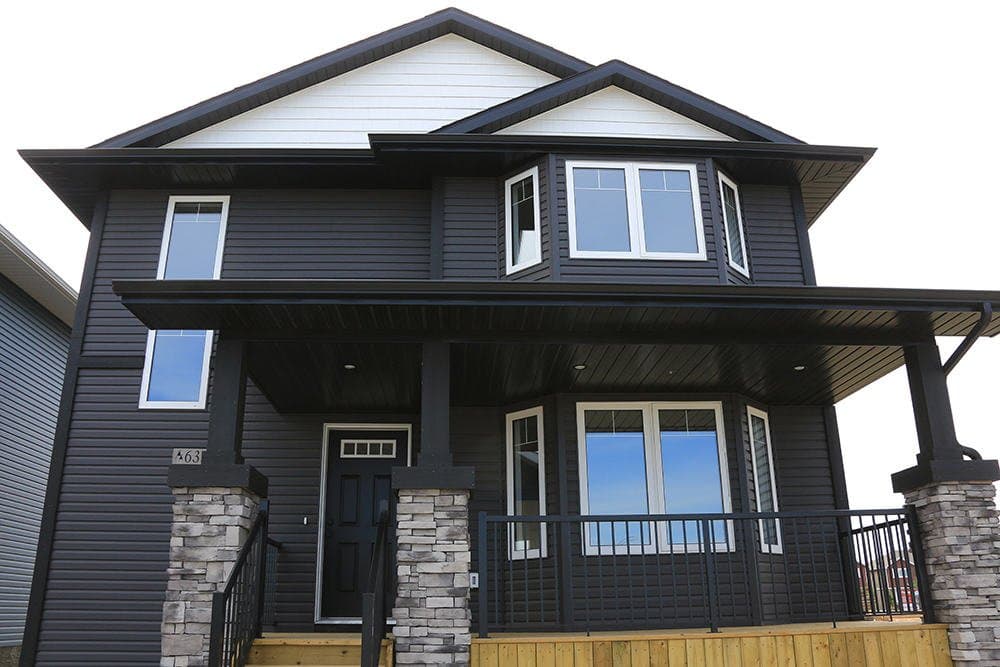
How do you maintain James Hardie siding to keep it looking new?
James Hardie fiber cement siding needs very little upkeep — rinse it with a garden hose once or twice a year to clear dirt and pollen, inspect the caulk around joints and trim every spring, and touch up any paint chips before moisture gets behind the finish. Catch small issues early and the siding will easily outlast the 50-year limited transferable warranty it carries.
Does fiber cement siding hold up to St. Charles County's weather?
Yes. Fiber cement is one of the best materials for Missouri's climate precisely because it handles temperature swings, humidity, and freeze-thaw cycles without warping, rotting, or cracking the way wood does. James Hardie engineers their products specifically for high-humidity regions, and St. Charles County's hot summers and icy winters fall squarely within that tested range.
How often does James Hardie siding need to be repainted?
With the factory-applied ColorPlus finish — which carries a 15-year warranty — most homeowners in St. Charles County won't touch a paintbrush for well over a decade. If you chose a primed-only board, plan on painting within 180 days of installation and recoating every 7 to 10 years after that, depending on sun exposure and color choice.
Below you'll find a practical, season-by-season maintenance plan built around how St. Charles County weather actually behaves. Whether your James Hardie Siding was installed last year or a decade ago, these habits protect your investment and keep the warranty intact.
Why St. Charles County's climate is the real test for any siding
St. Charles County sits in Missouri's humid continental zone — summer afternoons push into the 90s, winter nights drop below 10°F, and spring brings heavy rain and strong storms. That cycle of heat, freeze, thaw, and moisture is exactly what separates durable fiber cement from cheaper alternatives that warp or rot inside five years.
Fiber cement doesn't absorb moisture the way wood does, but it still needs a little attention at the seams and trim lines where caulk can shrink over years of thermal movement. Miss that window every spring and you're inviting water behind the wall — the one place no siding material performs well.
Your season-by-season maintenance checklist
Annual Maintenance Checklist for James Hardie Siding
- Spring: Rinse the entire exterior with a low-pressure garden hose. Walk every seam, window corner, and trim joint with a caulk gun and look for cracks or gaps wider than a credit card.
- Spring: Touch up any paint chips or scratches with color-matched paint before the rainy season starts. James Hardie's ColorPlus palette has exact matches.
- Summer: Check for efflorescence (white mineral deposits) near the foundation line where splash-back hits the board. Keep mulch and soil at least 6 inches below the siding bottom edge.
- Fall: Clear gutters and downspouts so water routes away from the siding base. Overflowing gutters dump water directly on the top courses of siding — the leading cause of premature finish wear.
- Fall: Trim any tree branches that rest or rub against the siding. Constant contact scratches the ColorPlus finish and creates damp spots where mildew can form.
- Winter: After ice storms, visually scan for any impact damage. Fiber cement is impact-resistant, but hail or falling branches can still chip it. Note any damage so you can address it in spring before moisture cycles accelerate wear.
What cleaning method actually works on fiber cement?
A standard garden hose on a medium-fan setting handles the vast majority of dirt, pollen, and grime. Spray from the top down so rinse water doesn't force debris under the lap joints. If mildew spots appear — common on north-facing walls that stay shaded and damp — a soft-bristle brush with a diluted household cleaner works fine.
Avoid pressure washing at high settings. According to James Hardie's official maintenance guidelines, pressure washing above 1,500 PSI can erode the ColorPlus finish at seams and lap edges. Low-pressure rinse is all you need.
Never use abrasive scrubbers or solvents. They strip the finish faster than any St. Charles County summer ever would.
Caulk and paint touch-ups: the two jobs that protect everything else
Caulk is the unsung hero of a siding installation. It seals the gap between the fiber cement board and every window frame, door casing, corner trim, and penetration (outlets, spigots, light fixtures). Missouri's temperature swings — sometimes 50 degrees in a single day — cause constant expansion and contraction. Over three to five years, caulk shrinks and cracks. Inspect it every spring and recaulk wherever you see a gap.
Use a paintable, siliconized acrylic caulk rated for exterior use. It bonds to fiber cement, stays flexible through freeze-thaw cycles, and accepts touch-up paint cleanly.
For paint touch-ups on ColorPlus boards, order the color-matched James Hardie touch-up paint through your installer. Doing it yourself with a close-but-not-exact color from the hardware store creates visible patches that get worse over time as both finishes age differently.
- Caulk check: Every spring, every seam
- Paint chips: Touch up within the same season you notice them
- Full repaint trigger: Chalking, fading, or peeling at 7–10 years on primed boards
Fiber Cement vs. Vinyl: What Maintenance Really Looks Like
| Factor | James Hardie Fiber Cement | Standard Vinyl Siding |
|---|---|---|
| Impact resistance | High — holds up to hail and debris | Cracks and dents in cold temps |
| Moisture resistance | Does not rot or swell | Can trap moisture behind panels |
| Paint / finish life | 15-year ColorPlus warranty | Color fades, can't repaint easily |
| Caulk maintenance | Check seams every 3–5 years | Seams shift; harder to re-seal |
| Warranty | 50-year limited transferable | Varies — often 20–25 years |
- Impact resistance: Fiber cement holds up to hail and storm debris — vinyl cracks in cold temps
- Moisture: Fiber cement doesn't rot or swell — vinyl can trap moisture behind panels
- Finish life: ColorPlus carries a 15-year warranty — vinyl fades and can't be repainted cleanly
- Warranty: 50-year limited transferable on Hardie — vinyl typically tops out at 20–25 years
Does good installation affect how much maintenance you need?
Yes — significantly. Fiber cement installed with the wrong nail depth, wrong caulk product, or boards cut without sealing the field-cut edges will need attention far sooner than siding installed to James Hardie's specs. This is one reason the manufacturer's warranty requires professional installation by a trained contractor.
We're a James Hardie Elite contractor, and we've been installing fiber cement in St. Charles County and the St. Louis area since 2002. The same crew that measures your home installs it — no subcontractors. That means the person sealing your field cuts is the same person who cut the boards, and they know exactly what they're leaving behind. Homeowners in James Hardie Siding installations through us and in James Hardie Siding projects throughout Manchester consistently tell us the five-step installation process — with a final walkthrough before we call it done — is what sets the job apart.
According to the U.S. Department of Energy, proper air sealing at wall penetrations and seams is one of the highest-impact steps in reducing moisture intrusion and energy loss — which is exactly what correct caulk placement during installation handles.
Frequently Asked Questions
Can I pressure wash James Hardie siding to clean it?
A low-pressure rinse with a garden hose is the recommended cleaning method. Pressure washing above 1,500 PSI can erode the ColorPlus finish at lap edges and seams. If you do use a pressure washer, keep the setting low and the nozzle at least 18 inches from the surface. A soft-bristle brush with mild cleaner handles stubborn mildew without risking finish damage.
How long does the ColorPlus finish actually last in Missouri's climate?
James Hardie's ColorPlus finish carries a 15-year warranty against peeling, cracking, and chipping — and Missouri's climate falls within the range the finish is engineered for. Most homeowners in St. Charles County see the finish hold up well past the warranty period with basic annual maintenance. Touch up chips promptly and the finish performs even longer.
What happens if I skip the annual caulk inspection?
Skipped caulk inspections allow small gaps at window frames, trim joints, and penetrations to widen over time. Once water gets behind fiber cement boards, it can damage the house wrap, sheathing, and framing — none of which are covered by the siding warranty. A 20-minute spring walkthrough with a caulk gun costs almost nothing compared to a moisture remediation repair.
Is fiber cement siding a good choice if I plan to sell my home?
Yes. James Hardie siding is one of the few exterior upgrades that consistently delivers strong resale value. The 50-year limited transferable warranty transfers to the new owner, which is a genuine selling point. Realtors in the St. Louis and St. Charles County market recognize fiber cement as a premium exterior — it photographs well and signals to buyers that the home was maintained carefully.
What's the difference between a James Hardie Elite contractor and a standard installer?
Elite contractors meet higher training and installation standards set directly by James Hardie, including certification in proper fastening, caulking, and field-cut sealing techniques. Installing with an Elite contractor is one of the requirements for maintaining the full manufacturer's warranty. The Window and Siding Source of St. Louis holds Elite status and has since we began carrying the Hardie line.
Ready to talk through a siding project or get a professional eye on your current fiber cement installation? Call us at 636-224-2444 or email patrick@thewindowandsidingsource.com to schedule a free in-home consultation — written quote on the spot, no pressure, no obligation. And if timing is a factor, ask about our 5-year, interest-free financing with no money down (subject to approval).